
For US service members, civilian employees and families in Korea
Arrested or questioned off base in Korea?
If the incident happened off base, a Korean police officer and a Korean prosecutor will usually decide what happens next, in Korean. What you say in the first interview is very hard to take back. YUSU Lawfirm is a Korean law firm run by a former prosecutor, and we work with you directly in English from the first call.
- Run by a former prosecutor. She reviews every case and sets the strategy.
- English, no interpreter in between. You talk to the lawyers directly.
- Interview attendance anywhere in Korea. No travel or interpreter fee.
- Fees in writing before you commit. No surprises later.
In short: Under the Korea and US Status of Forces Agreement (SOFA), Korea generally has the primary right to try offences committed off duty, and in peacetime US military authorities do not exercise criminal jurisdiction over civilian employees and family members, so Korean courts can try them directly. SOFA gives you procedural protections, not immunity. A SOFA lawyer in Korea makes sure those protections are actually used, and builds your defense under Korean law from the first interview.
Where are you right now?
Urgent
Detained or just arrested
- You can stay silent and ask for a lawyer.
- For questioning after arrest, SOFA provides for a US representative to be present. Ask for it.
- Do not sign a statement you cannot read.
Before the interview
Called in by the police
- Agree a date; do not ignore the request.
- A lawyer can sit with you in the interview.
- Prepare your account before you give it.
After the interview
Waiting for a decision, or charged
- The prosecutor can still decide not to charge.
- A written defense opinion filed now can change the outcome.
- PCS soon? A case can stop you leaving.
Off base is different
Many people assume the military will handle it. For an incident inside the military, that may be true. For an incident off base, in a bar, on the road or at home, you should expect to need your own Korean counsel. Ask your legal office exactly what it can do for you, and in which court. Then decide with full information.
- Korean procedure, Korean language. The interview, the record and the charging decision are in Korean.
- Settlement matters. In many Korean cases, an agreement with the victim and a statement that they do not want you punished weigh heavily. Someone has to negotiate it properly.
- Time is short. The best moment to influence a prosecutor is before the charging decision, not after.
SOFA in plain English
| Question | The short answer |
|---|---|
| Who decides whether I am tried in Korea? | For offences off duty, Korea generally has the primary right. For offences arising in the performance of official duty, the US does. A US duty certificate is strong evidence, but Korean courts treat it as rebuttable, and Korea can contest it through a set consultation procedure. |
| I am a civilian employee or a family member. | In peacetime, US military authorities do not exercise criminal jurisdiction over civilians and dependents, so Korean courts try them directly. A court has applied this to a reservist who was not on active duty. |
| Will a US representative be present? | Only when both are true: you have been arrested or detained, and you are being questioned. Korean courts have held that a breath test, checks made while you came to the station voluntarily, and a seizure of items do not require a US representative. Your right to legal representation starts at the moment of arrest. |
| Who holds me in custody? | Until indictment, custody generally stays with US authorities, but you must be made available to Korean investigators. At indictment or later, Korea can request custody in twelve categories of serious cases (including murder, rape, drug trafficking, arson, armed robbery, assault resulting in death, and drunk driving or hit and run causing death) where a Korean court finds custody necessary. If Korean police arrest you at the scene for murder or an egregious rape, Korea may keep you. |
| Can I leave Korea on PCS orders? | Not always. Under Korean immigration law you are a foreigner, so a departure ban under Article 29 of the Immigration Act can apply: in principle up to 10 days for an investigation and up to 3 months while a trial is pending, both extendable. Courts have cancelled bans that went beyond what was necessary, for example where the person cooperated and had stable ties in Korea. Plan early. |
A case like this: a US civilian employee poured hundreds of bottles of formalin down a drain into the Han River system, and the US issued a duty certificate and disciplined him. The Korean court still tried the case. In peacetime the US does not exercise criminal jurisdiction over civilians, the certificate was not decisive, and US discipline did not affect Korean jurisdiction. A duty certificate is the start of the argument, not the end of it.
These are general rules. Which ones apply to you depends on your status and on how the case started, which is the first thing a SOFA lawyer in Korea checks.
If you know the US system: five differences
| What many Americans expect | What happens in Korea | |
|---|---|---|
| Right to silence | Read your rights, then decide. | You have it, and police must tell you. You can also refuse individual questions. |
| Lawyer in the room | Ask for a lawyer and questioning stops. | On request, your lawyer may attend the interview, and police may not refuse without good reason. |
| Your statement | A transcript is made later. | A written record is made on the spot. You may read it and ask for corrections before you sign. |
| Plea deals | Most cases end in a plea bargain. | There is no formal plea bargaining. The prosecutor decides whether to charge, and can suspend the indictment. |
| The victim | The victim is a witness. | The victim’s wishes and any settlement are central, and in some offences decide whether the case proceeds. |
The single most common mistake we see is treating the first interview as a formality. In Korea it is often the evidence that decides the case.
How we prepare you for the interview
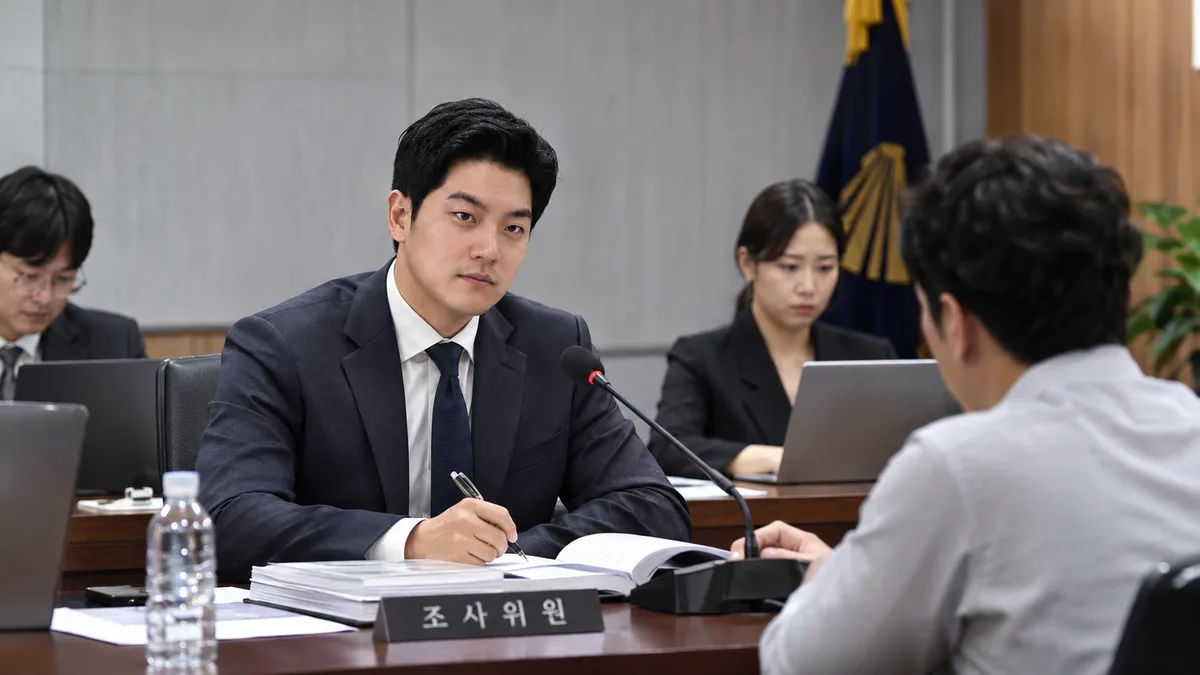
We rehearse before you sit the real interview. Our criminal affairs advisor Lee Chunggeol, a former police investigator, runs a mock interview with the questions investigators typically ask. He is not a lawyer; the legal advice and the strategy come from the attorneys.
You walk in knowing what will be asked, what the record will say, and what not to sign.
- Step 1. Facts first. We take your account in English and check it against what the police are likely to have: CCTV, dashcam, messages, witnesses.
- Step 2. Strategy. Attorney Soobin You, a former prosecutor, decides what to say, what not to say, and whether settlement should be explored.
- Step 3. Rehearsal. A mock interview, so the real one holds no surprises.
- Step 4. In the room. Attorney Kyungmin Kim, educated in the United States, attends the interview with you and checks the Korean record before you sign.
- Step 5. Before the decision. We file a written defense opinion with the prosecutor while the decision is still open.
Cases like these
Each case turns on its own facts. These show the kind of issues that come up, and what made the difference.
A court decision
A cannabis parcel, a SOFA objection, an acquittal
An American civilian working with US Forces argued only US authorities could try him. The court disagreed, but acquitted him: nothing showed he ordered or paid for the parcel. The strategy was to attack the link between the parcel and the person, not the parcel itself.
Read the case →YUSU result
Traffic accident: not guilty at a jury trial
We built the defense on the objective accident material and argued no breach of the duty of care. A jury acquitted, and the prosecutor’s appeal was dismissed.
Read the case →YUSU result
Repeat drunk driving: prison replaced by a fine
Retained on appeal after the client was jailed at first instance. The appeal court replaced the prison term with a fine and the client was released.
Read the case →If you are a service member and Korean police have just called, start with our step by step guide: US soldier questioned by Korean police near Camp Humphreys or Osan: first steps under SOFA.
What it costs
You receive the scope and the fee in writing before you commit. We do not contact your unit or command without your instruction.
Where we are
- Seoul office (Mapo, next to the Seoul Western District Court): for Yongsan, Camp Humphreys, Osan and the Seoul area.
- Gyeongju office, about an hour from Daegu: for Camp Walker, Camp Henry, Camp Carroll and the southeast.
- Zoom: for a first consultation wherever you are, including after you have left Korea.
Why choose YUSU Lawfirm as your SOFA lawyer in Korea
- A Korean law firm run by a former prosecutor. Attorney Soobin You served as a Korean public prosecutor. She knows what persuades a prosecutor not to charge, and she reviews every case herself.
- English from the first call. Attorney Soobin You and Attorney Kyungmin Kim consult directly in English.
- Criminal defense is our core work. DUI, assault, drugs, sex offence allegations and traffic accidents.
- Clear fees. Published consultation and interview fees, and the full fee in writing before you decide.
A SOFA lawyer in Korea is most useful before the first interview, but it is rarely too late: the charging decision, the trial and an appeal are all points where a SOFA lawyer in Korea can still change the outcome.
Frequently asked questions
Can a US soldier be tried in a Korean court?
Yes. For offences off duty, Korea generally has the primary right to try the case, unless it waives that right.
Does SOFA apply to civilian employees and family members?
SOFA covers them, but in peacetime US military authorities do not exercise criminal jurisdiction over them, so Korean courts try them directly.
Will the military pay for my Korean lawyer?
Ask your legal office. Support is often limited to matters connected with the military. For an off-base incident, expect to need your own Korean counsel.
Can I have a lawyer during the police interview in Korea?
Yes. On your request, your lawyer may attend, and police may not refuse without good reason.
I have PCS orders. Can I still leave Korea?
A foreigner under investigation can be stopped from leaving Korea. Tell your lawyer your departure date at once.
How much does a SOFA lawyer in Korea cost?
At YUSU Lawfirm a first WhatsApp question is free, a 30 minute consultation is KRW 100,000 (USD 85 from abroad), and police interview attendance is KRW 4,400,000, VAT included, with no interpreter or travel fee.
This page is general information about Korean criminal procedure and the Korea and US SOFA. It is not legal advice, and it is not an official statement of US Forces Korea policy. Each case depends on its own facts.
US Forces Korea community
Three lines are enough to start.
Your status (service member, civilian or family member), what happened and where, and what stage you are at. In reply we tell you:
- whether Korean or US authorities are likely to handle the case
- what to do, and not do, before the interview
- what we would charge, in writing