
Written by Attorney Soobin You, a former prosecutor licensed in Korea, defending criminal cases with consultations available in English.
Quick answer: In Korea, a pedestrian jaywalking does not automatically clear the driver of responsibility. But if the collision was genuinely impossible to foresee or avoid, a not-guilty outcome is possible. Courts look at whether the driver could have avoided the accident and whether basic duties of care, like slowing down or stopping, were met. Where an accident was truly unforeseeable, drivers have been acquitted.
A single moment of inattention behind the wheel can lead to a serious accident, and in Korea that can mean not only civil liability but criminal responsibility. For foreigners driving in Korea, a collision with a jaywalking pedestrian often feels deeply unfair. Here is when a driver can contest the charge, from a Korean English-speaking lawyer’s perspective.

If a pedestrian jaywalked, am I still responsible?
The fact that someone jaywalked does not automatically release the driver from responsibility. The Korean Supreme Court’s position is that a driver still has basic duties of care, such as slowing down and stopping when appropriate, but is not required to anticipate truly exceptional situations.
So the analysis cuts both ways. If the circumstances show the driver could have avoided the collision even though the pedestrian was jaywalking, fault may be recognized. But where the situation was genuinely difficult to foresee or avoid, the door to a not-guilty outcome opens.
A real case that ended in acquittal
Consider an actual example. On a dark road at night, the signal turned green, and a motorcyclist who had confirmed a bus starting up ahead set off after waiting. Because the rider had been waiting and then started, the speed was not particularly high. In that moment, a pedestrian crossed the center line and jaywalked in front of them.
The court found that “it is difficult to foresee pedestrians crossing the center line and jaywalking roughly three to four seconds after the vehicle signal turned green.” Treating it as an exceptional situation, the court acquitted the driver.
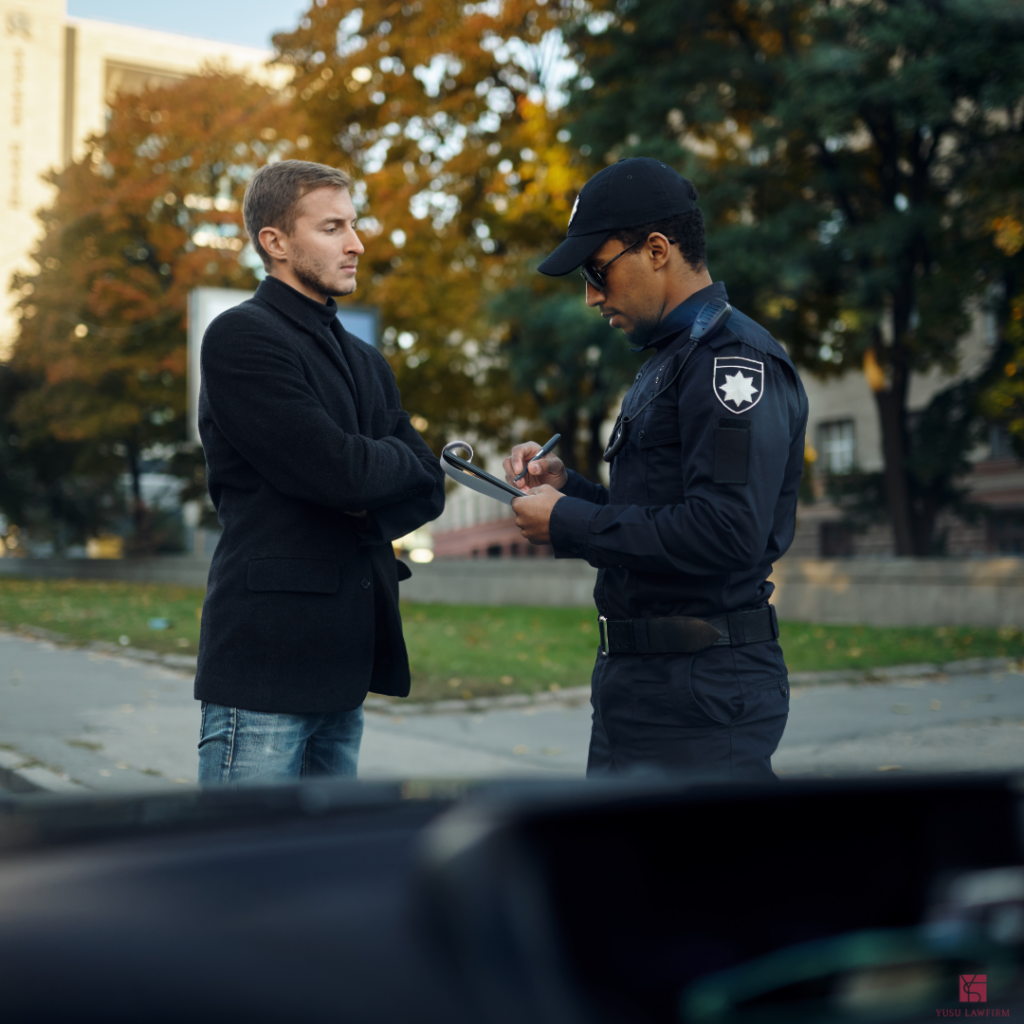
So why was the case prosecuted at all?
During the investigation, the injured parties stated that “the pedestrian signal was green,” and the prosecutor, relying on that, concluded there had been a possibility of foreseeing the accident and brought charges.
In practice, even when a court returns a not-guilty verdict, prosecutors not infrequently appeal, so responding strategically from the very beginning is far more advantageous. The most ideal result is for the case to end at the police or prosecution stage with a decision of no charges (불송치) or non-prosecution (불기소).
Among similar precedents, there are cases where, even with some speed-limit violation, a driver was found not guilty because avoidance was realistically impossible despite spotting the pedestrian and slowing down. In the end, reconstructing the scene and persuasively addressing foreseeability and avoidability are the core of these cases.
How to prepare a pedestrian-accident case
Reconstruct the facts. When the signal changed, whether the vehicle was waiting to start, the movement of surrounding vehicles, and the pedestrian’s path and speed.
Secure the evidence. Dashcam footage, CCTV, emergency call (112/119) records, scene photos, and the road structure and lane layout.
Build a statement strategy. Explain clearly and consistently the specific circumstances that made foreseeing or avoiding the accident difficult.
The right approach reflects the charge (죄, causing injury or death by a traffic offense) from the earliest stage, systematizing the logic and evidence through mock questioning, attendance at police interviews, and a written not-guilty opinion. What happens in that first interview is usually what the prosecutor later reads, which is why we treat the police investigation stage as part of the defence. If you have been unfairly caught up in a traffic accident, a fast response is best, whether before or after the investigation begins.
Traffic cases involving pedestrians turn almost entirely on reconstruction — sight lines, speed, braking distance, and what each party could actually see at the moment it mattered. Building that reconstruction is defence work and it belongs to the investigation stage, not to the courtroom. See how we defend criminal and traffic cases in Korea.
More outcomes are collected in our Case Results.
Frequently Asked Questions
Q: If a pedestrian jaywalked in Korea, am I automatically not at fault?
A: No. Jaywalking does not automatically clear the driver. Courts examine whether you met basic duties of care and whether you could have avoided the collision. A not-guilty outcome is possible only where the accident was genuinely unforeseeable or unavoidable.
Q: Can I be found not guilty in a traffic accident case in Korea?
A: Yes, in the right circumstances. Where the evidence shows the accident could not reasonably have been foreseen or avoided, drivers have been acquitted, even in cases involving injury.
Q: What evidence matters most in these cases?
A: Dashcam and CCTV footage, emergency call records, scene photos, and the road layout, used to reconstruct the timing and show that foreseeing or avoiding the collision was not realistic.
Q: The court found me not guilty. Can the prosecutor still appeal?
A: Yes. Prosecutors do sometimes appeal an acquittal, which is why building a strong, strategic case from the earliest stage matters, ideally aiming to end the case at the police or prosecution stage.
Q: I’m a foreigner who had an accident in Korea. Can I get help in English?
A: Yes. A Korean English-speaking lawyer can take your account in English and handle the case from the investigation stage, where reconstructing the scene and framing foreseeability often decide the outcome.
This article is for general information only and does not constitute legal advice. Outcomes depend on the specific facts of each case. For advice on your situation, consult a licensed attorney.
Involved in a traffic accident in Korea and unsure of your responsibility? YUSU Lawfirm (법무법인 유수), founded by former prosecutor Soobin You, with a team that includes Kyungmin Kim, a US-educated Korean attorney, provides English-language criminal defense from the investigation stage. With offices in Seoul (Mapo) and Gyeongju, contact us via KakaoTalk or the inquiry form.
Were you the driver in an accident like this?
Tell us what the road looked like, what the pedestrian was doing, and what the police have said so far. You can also ask what we would take on and what it would cost, before you commit to anything. There is no need to call first.
Tell us about your caseCriminal defense for foreigners in Korea