
Police Investigation Support for Foreigners in Korea
Contacted by the Korean police or asked to appear for questioning?
What you say during an investigation can affect what happens next. YUSU LAWFIRM helps international clients understand the process, prepare before questioning, and receive legal assistance throughout the investigation.
Received a Call or Notice From the Korean Police?
When contacted by the Korean police, international clients may need help understanding the purpose of the investigation, their current situation, the expected schedule, and what information or documents to prepare. Organizing the facts and available materials before a police interview in Korea can help make later discussions with counsel more focused. An interpreter assists with language; legal advice addresses the meaning and potential consequences of the investigation.
Where the contact has already gone further than a request to attend, see what Korean law requires in the 48 hours after an arrest. For the wider picture of how a criminal case is defended, see our criminal defence overview, and for who handles it, our team page.
Your first questions about a Korean police investigation
These are the questions international clients ask in the first phone call. General answers are below; how they apply depends on your notice and the offense under investigation.
Why did the police contact me?
Because a case naming you or your account, vehicle, phone or address has been opened — usually on a complaint (고소) or a report (고발), or after the police identified you during an existing investigation. The notice itself rarely explains the substance. The investigating officer’s station and the case number on the notice are the starting point for finding out what the case is about.
Am I a suspect or a witness?
This matters more than almost anything else, and you are entitled to ask. A suspect (피의자) is being investigated for an offense; a witness or reference (참고인) is being asked about someone else’s case. The status can change during an investigation, and people are sometimes questioned as a reference and later treated as a suspect, so it is worth confirming before you attend rather than after.
Do I have to attend?
A suspect interview request is not something to ignore. Repeatedly failing to appear without explanation can lead the police to seek compulsory measures, and non-appearance is generally read unfavorably. Attending is normally the right course — the question is what preparation you do first, not whether to go. The Presidential Decree on investigation procedure (the Regulation on Mutual Cooperation between Prosecutors and Judicial Police Officers and General Rules of Investigation, Article 19) also directs investigators to consider whether an appearance is necessary at all, and to have regard to a person’s privacy and livelihood when arranging it. That is a duty on them in setting the appointment rather than a personal right to choose the date, but it is a legitimate basis for proposing a workable time instead of simply not appearing.
Can I change the interview date?
Often yes. Interview dates are commonly arranged by agreement with the investigating officer, and a rescheduling request with a genuine reason — work, travel, or the need to instruct a lawyer first — is frequently accommodated. Ask early rather than on the day, and make the request rather than simply not appearing.
Should I speak to a lawyer before the interview?
The interview produces a written statement that follows the case to the prosecutor and, if the case is indicted, into court. Correcting it afterwards is far harder than preparing for it, which is why the preparation stage is where a defense lawyer usually adds the most. See why the investigation stage matters. For what the interview itself involves — the rights an officer must explain before the first question, and how the written record is made — see what happens in a Korean police interview.
What happens after the police investigation?
The police send the case file to the prosecutor, who may investigate further and then decides whether to indict, and in what form. Not every investigated case is indicted. Because that decision is made on the file the investigation produced, what happens at the police stage shapes it. The full path is set out on our criminal defense page.
How YUSU LAWFIRM Can Help
BEFORE THE INTERVIEW
We review the known facts, available materials, and the expected issues before the interview.
- Case Review
- Evidence Review
- Legal Strategy
- Interview Preparation
- Statement Simulation
DURING THE INTERVIEW
Where included in the agreed scope, counsel can attend the interview and provide legal assistance during the questioning process.
- Attorney Attendance
- Legal Assistance During Questioning
- Communication Support
- Statement Review
AFTER THE INTERVIEW
After the interview, the next steps can be reviewed based on what occurred and the available records.
- Post-Interview Assessment
- Record Review where applicable
- Written Legal Submissions where appropriate
- Next-Step Strategy
Interpreter and Lawyer: Different Roles
Interpretation and legal assistance serve different purposes. Where interpretation is available, legal counsel can separately help a client understand the issues being discussed and prepare for the investigation.
Why International Clients Choose YUSU LAWFIRM
A Legal Team That Understands the Investigation Process

Soobin You
Founding & Managing Attorney
Former Prosecutor

Kyungmin Kim
Deputy Managing Attorney
U.S.-Educated · Fluent in English

Chunggeol Lee
Former Police Investigator
13 Years of Investigative Experience
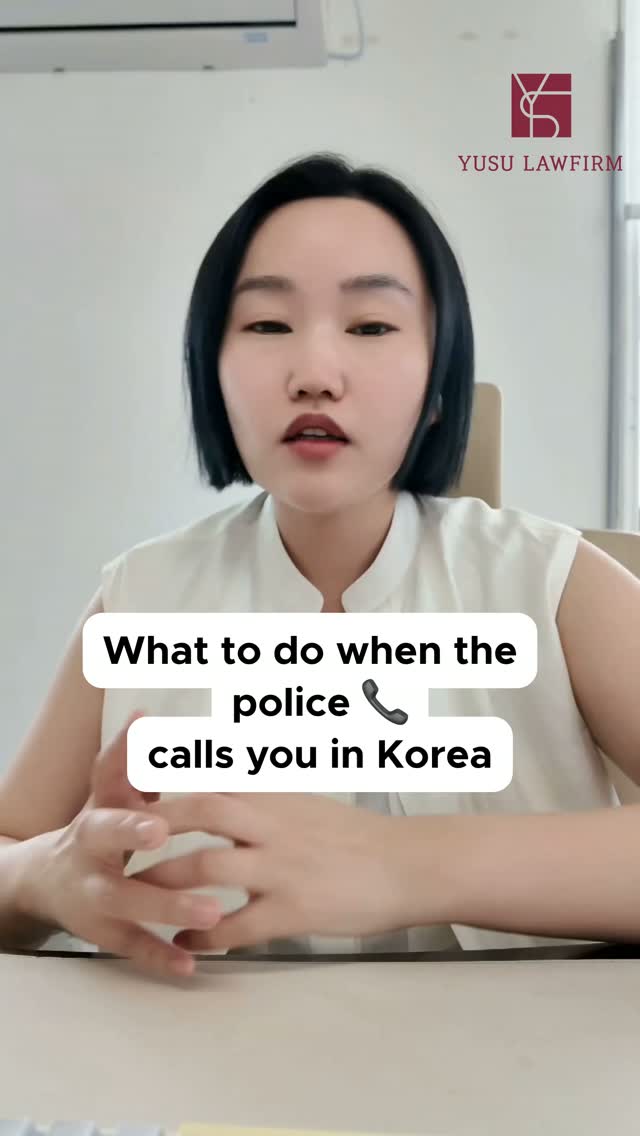 ▶
▶What to Do When Korean Police Contact You
Received a call from the police? This short English video explains practical first steps to consider before attending an interview.
WATCH THE VIDEO →How We Handle the Matter
Police Investigation in Korea: Frequently Asked Questions
Can a lawyer attend a police interview in Korea?
Attorney attendance may be available depending on the circumstances. YUSU LAWFIRM can review the situation and explain the assistance it can provide for a police interview in Korea.
Do I need a lawyer before speaking with Korean police?
Every situation is different. Speaking with counsel beforehand can help you organize the facts, identify important documents, and understand the purpose of the interview.
What should I do if Korean police contact me?
Confirm who contacted you, the stated purpose of the contact, the requested date, and any documents mentioned. Keep the notice or message and consider obtaining legal advice before the interview.
Can I receive legal assistance in English?
Yes. YUSU LAWFIRM provides direct English communication for international clients seeking legal assistance in Korea.
What documents should I prepare for a police investigation?
Relevant notices, messages, contracts, photographs, records, and a simple timeline may help with an initial review. The appropriate materials depend on the specific matter.
What happens after a police investigation in Korea?
The case file goes to the prosecutor, who may investigate further before deciding whether to indict. Not every investigated case results in an indictment, and the decision is made on the record built during the investigation.
Can a foreigner ask to change a Korean police interview date?
Interview dates are usually arranged with the investigating officer, and a rescheduling request made in advance with a genuine reason is often accommodated. Requesting a change is treated very differently from simply not appearing.
What these investigations look like in practice
Contacted by the Police in Korea?
Whether your interview is upcoming or has already taken place, you can ask about the next steps. Send a brief summary and any upcoming date using the inquiry form below. Please do not send evidence or documents now.
Summoned, or already questioned?
Do you need a lawyer before your next interview?
Send a brief summary, the current stage and any upcoming date. No documents or sensitive evidence are needed now. YUSU Lawfirm’s legal team will review your inquiry and contact you using the details you provide. We will request any additional information separately and explain any consultation or representation fees before you decide whether to proceed. Your inquiry will not be published.